
St Brendan’s Church
Visit St Brendan’s Church in Corby and read its history, including its connection with the former St Patrick’s parish.
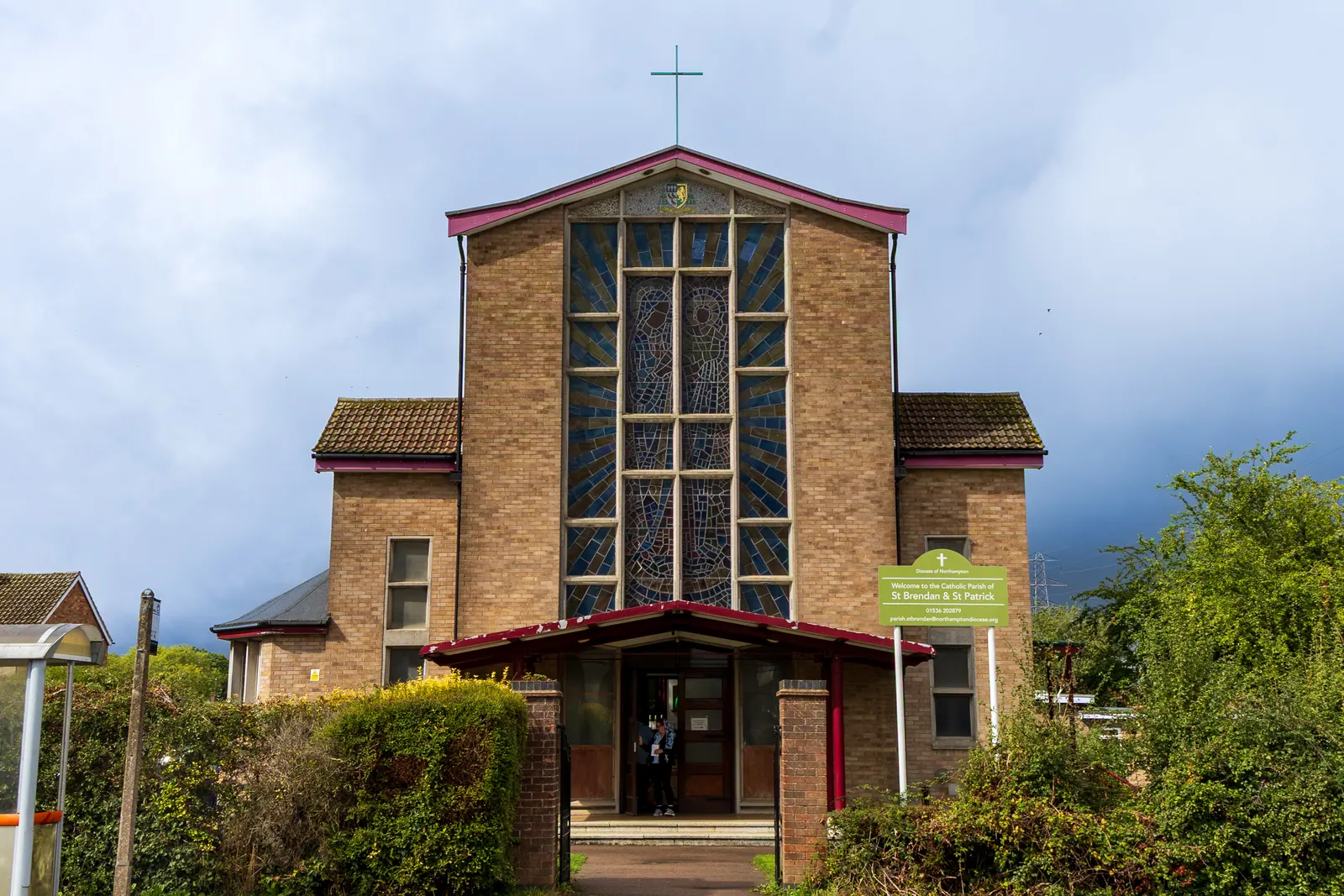
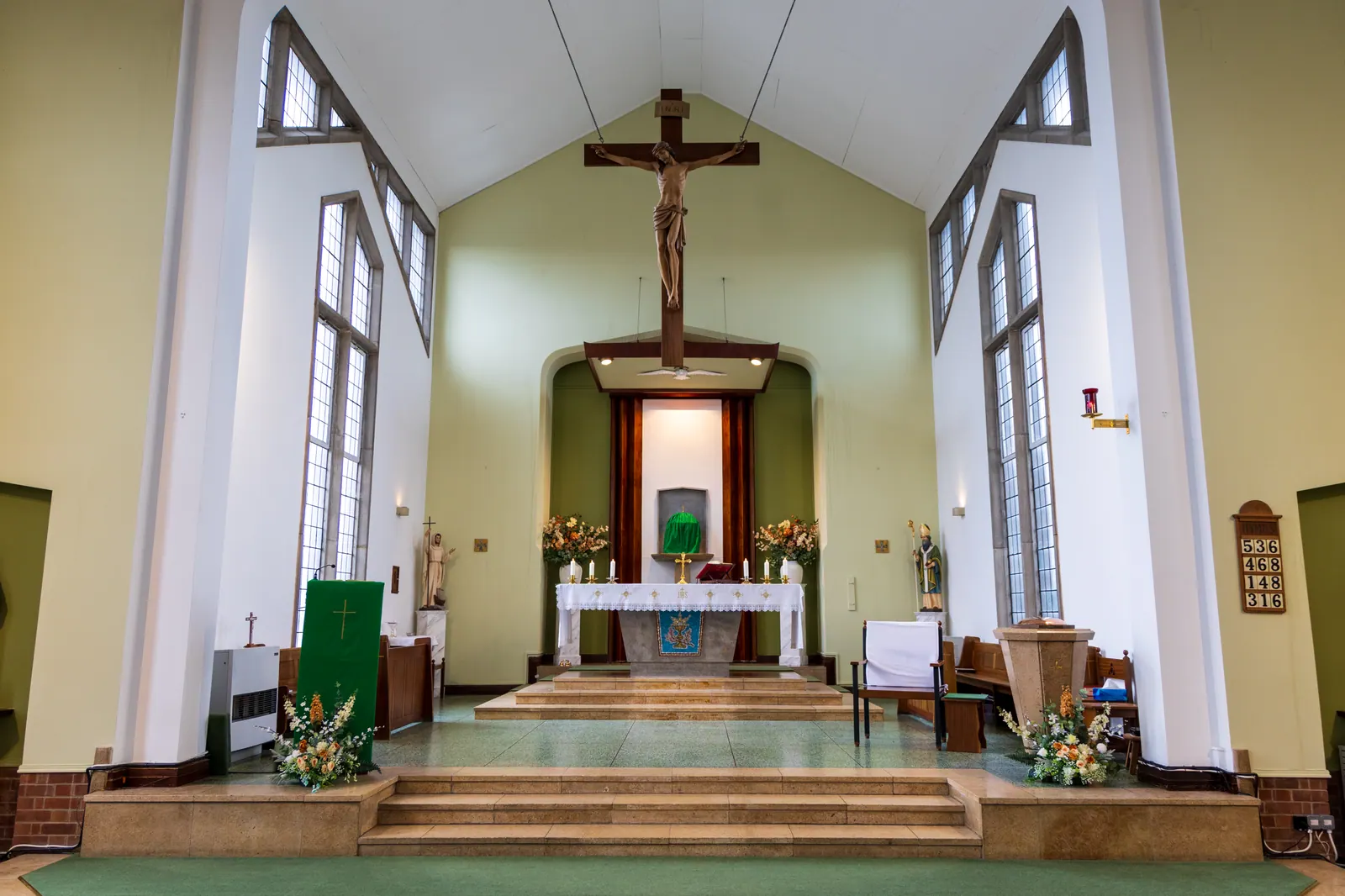
St Brendan’s is one of the two churches of The Good Shepherd Parish.
Address and directions
St Brendan’s Church
151 Beanfield Avenue
Corby NN18 0AZ
Worship
See the parish Mass times. Please check the current newsletter or call the office before travelling, as times can change.
Visiting or contacting us
The shared parish office is at Our Lady of Walsingham Church. Call 01536 203121 or email parish.ourladyofwalsingham@northamptondiocese.org.
The office is open Monday, Tuesday, Thursday and Friday, 10.00am–4.00pm.
If you have a question about access or need help planning your visit, please contact the office. Detailed accessibility information will be added when confirmed.
The history of St Brendan’s
Corby did not have a Catholic church until Our Lady’s Parish was founded in 1934. As the town grew, Bishop Leo Parker asked Fr Dan Cronin to establish St Brendan’s Parish. Fr Dan celebrated weekday Mass at a rented house at 12 Essex Close, and the first Sunday Mass was held in Lodge Park School Hall in October 1956.
St Brendan’s Junior School opened in 1957. Its hall provided a place for worship while Fr Dan and parishioners raised funds for a new church. Local fundraising was joined by support Fr Dan sought from bishops, priests and communities in America. The church was dedicated to St Brendan, the Irish missionary.
Bishop Leo Parker laid the foundation stone on 16 May 1961, St Brendan’s feast day. The church was completed on 20 December 1962, when Bishop Charles Grant blessed it and celebrated its first Mass.
Twenty-five years later, Bishop Grant returned for the parish’s Silver Jubilee. His words to the community remain part of its story:
“I would ask you all to try to grow in faith. To make the Holy Mass the foundation of your life as Christians, to build on that foundation a meaningful Liturgy, with devotion to Our Lady and the Saints of the Church, to care for the sick, the lonely and the lapsed. By doing these things you will give an example to the people of your town and help to rebuild its fortunes on a sound base of work and prayer.”
St Patrick’s and St Brendan’s
St Patrick’s Parish was established in 1950 as Corby’s Catholic population grew alongside the steelworks. Parishioners raised funds for a new church, which opened for its first Mass on 16 May 1962. Its dedication to St Patrick recognised the many Irish people who had made Corby their home and contributed to the town and its Catholic community.
The church was consecrated by Bishop Charles Grant on 17 March 1981, the feast of St Patrick. In his homily, he encouraged parishioners to live St Patrick’s missionary spirit in everyday life.
The former St Patrick’s Church closed in 2022, with a final Mass on 31 August 2022. That service remembered the people who had built and worshipped in the church and the priests who had served it. Its parishioners were welcomed at St Brendan’s. Following consultation and a diocesan decree, the parishes of St Brendan and St Patrick were amalgamated on 1 April 2024. This is part of the history of the community now served by The Good Shepherd Parish; St Patrick’s is not listed as a current church location.
St Brendan the Navigator
Much of what has been passed down about St Brendan takes the form of legend. He was a real person, remembered for his faith and missionary work, though not every detail of the stories about his travels can be treated as historical fact.
Brendan was born near Tralee towards the end of the fifth century. Traditional accounts say he was placed in St Ita’s care as a child, later studied at St Jarlath’s school in Tuam, and was ordained in 512.
He established monasteries across Ireland. The best known was at Clonfert, remembered as a large community and a centre of missionary activity. Traditions about Brendan also tell of journeys across Ireland and to Scotland and England.
The best-known story is his voyage to the Land of Promise. The ninth-century Navigatio Sancti Brendani Abbatis (The Voyage of Saint Brendan the Abbot) tells of a seven-year journey west by sea. It became popular across medieval Europe and was translated into many languages.
For the community that bears his name, Brendan’s story offers an invitation to live the faith with courage, to care for others and to share the Gospel in everyday life.